Understanding the Differences Between Advocacy, Lobbying, Campaigning, and Activism
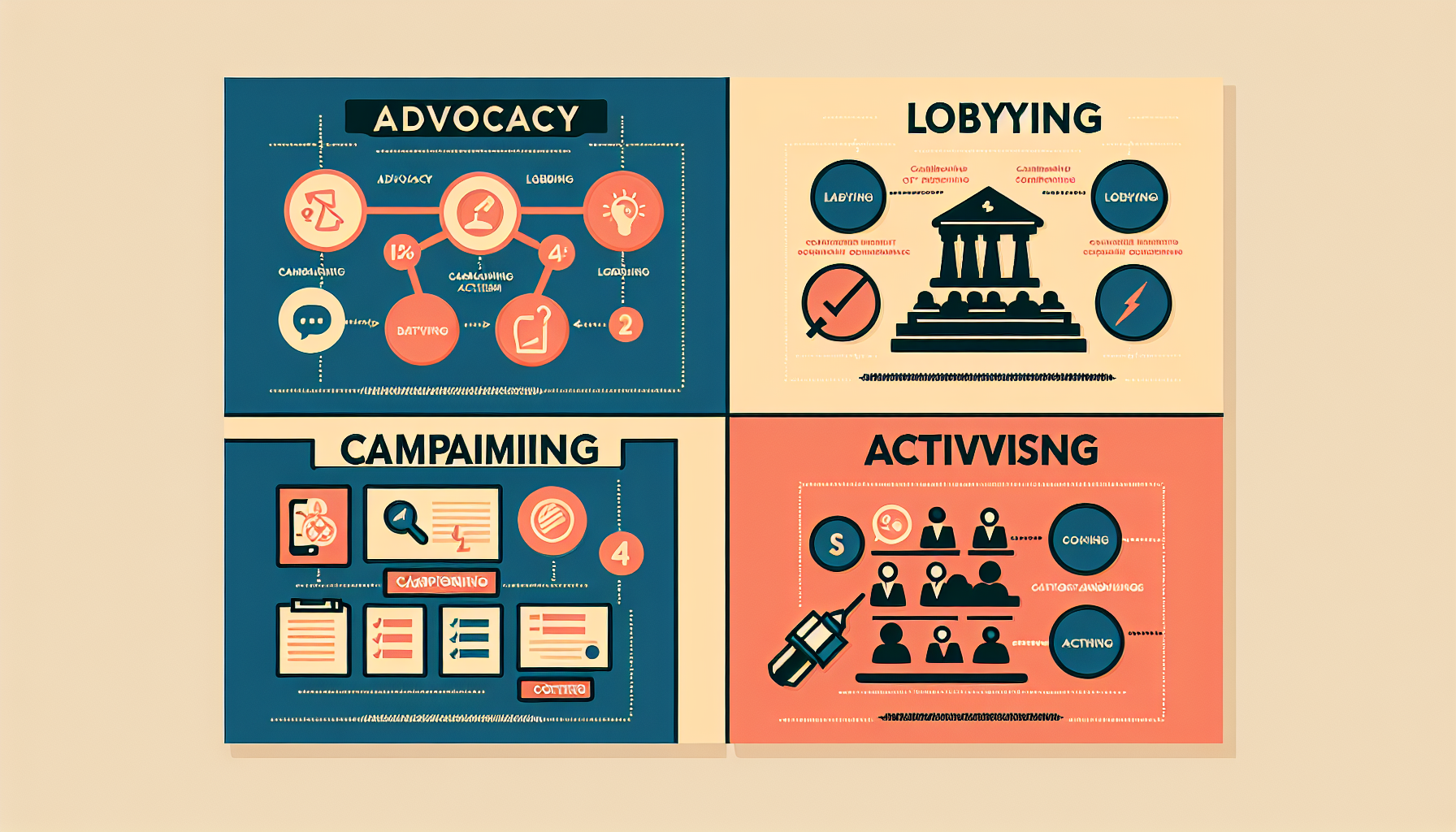
Advocacy, lobbying, campaigning, and activism are interconnected strategies aimed at influencing public policy and societal change. Understanding their distinctions is crucial for effective engagement in civic activities.
What is Advocacy?
Advocacy involves supporting or promoting a cause or policy. It encompasses a broad range of activities designed to influence public opinion and decision-makers. Advocacy can include:
- Public education
- Media outreach
- Coalition-building
Source: Bromund Law
What is Lobbying?
Lobbying is a specific form of advocacy focused on influencing legislation or government policy. It involves direct communication with legislators or government officials to persuade them to support or oppose specific legislation. Key points include:
- Direct efforts to influence specific legislation or policy
- Subject to legal regulations, especially for nonprofit organizations
Source: Church Law Center
What is Campaigning?
Campaigning refers to organized efforts to achieve a particular goal and often involves a series of actions or events aimed at raising awareness and mobilizing support. Campaign features include:
- Public demonstrations
- Media campaigns
- Grassroots organizing
While campaigning can include lobbying efforts, it also encompasses other strategies to build public support for a cause. Source: Resources People in Need
What is Activism?
Activism involves taking direct action to bring about social, political, environmental, or economic change. Activists often work outside established systems, seeking to disrupt the status quo and draw public attention. Common forms include:
- Protests
- Sit-ins
- Other forms of direct action
Source: Aristotle
Summary of Differences
In summary:
- Advocacy: Broad support for a cause, including education and public engagement.
- Lobbying: Direct efforts to influence specific legislation or government policy.
- Campaigning: Organized activities aimed at achieving a specific goal, often involving public mobilization.
- Activism: Direct actions taken to challenge existing conditions and promote change.
The Role of These Strategies in Democracy
Each of these strategies plays a vital role in the democratic process, offering different approaches to effecting change. Engaging in advocacy, lobbying, campaigning, or activism allows citizens to express their views, push for reforms, and hold decision-makers accountable. Understanding these distinctions can empower individuals and organizations to effectively contribute to societal advancements.