
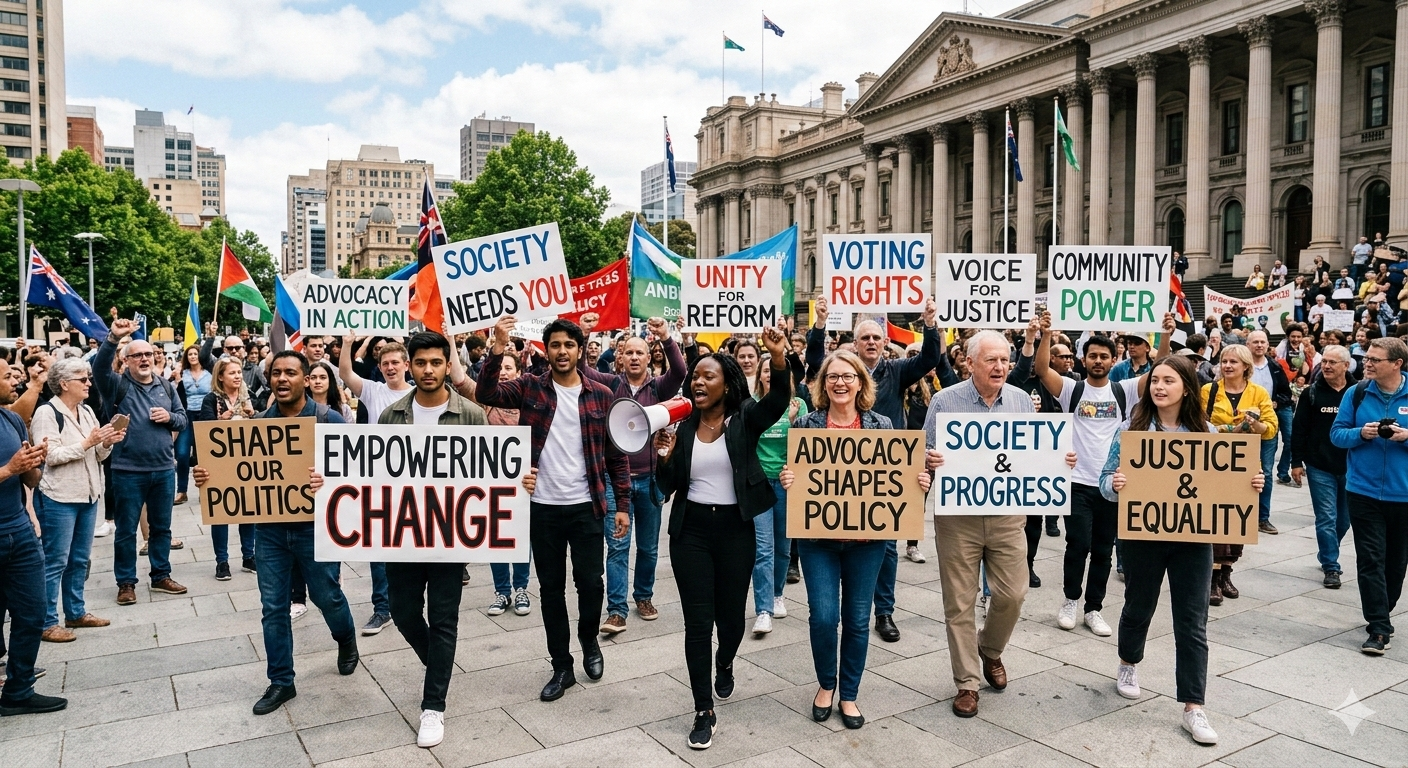
Empowering Change: The Role of Advocacy in Shaping Politics and Society
In an era defined by rapid-fire news cycles and polarized digital discourse, it is easy to feel like a mere spectator in the theater of governance. However, the history of progress tells a different story. Democracy is not a “set it and forget it” system; it is a contact sport that thrives on the friction between established policy and the evolving needs of the public. This friction is fueled by advocacy—the intentional act of supporting a cause or policy to influence outcomes within political, economic, and social systems.
How does an idea whispered in a community center eventually become a law signed in a capital building? Why do some movements fizzle out while others reshape the global social contract? The answer lies in the strategic application of advocacy. Beyond the simple act of casting a ballot, advocacy serves as the bridge between the lived experiences of citizens and the institutional power of the state. It is the most potent tool available for those seeking to transform societal grievances into systemic solutions.
Beyond the Ballot Box: Advocacy as the Pulse of Democracy
While voting is the cornerstone of democratic participation, it is often a “blunt instrument” used only every few years. Advocacy, conversely, is a continuous process that ensures the voices of the marginalized and the expertise of specialists are heard daily. In the modern political landscape, advocacy manifests in two primary forms: insider strategies and outsider strategies.
1. Direct Lobbying and Insider Strategies
Insider strategies involve working within the existing political infrastructure. This includes direct lobbying, where advocates meet with legislators, provide expert testimony at hearings, and help draft policy language. Professional advocates leverage their relationships and deep understanding of the legislative process to nudge policy in a specific direction. For these advocates, data and credibility are the primary currencies. They provide lawmakers with the technical information needed to justify a policy change, effectively acting as an external research arm for busy legislative offices.
2. Grassroots Mobilization and Outsider Strategies
Outsider strategies focus on building public pressure from the ground up. This is the realm of marches, social media campaigns, petitions, and community organizing. Grassroots advocacy seeks to change the political weather—making it politically “safe” or even necessary for leaders to support a specific cause. When thousands of constituents call a representative’s office or gather in a city square, they are signaling that a failure to act will carry a political cost. This form of advocacy democratizes influence, allowing those without significant financial resources to command attention through the power of numbers.
Historical Catalysts: When Advocacy Rewrote the Social Contract
To understand the power of advocacy, one must look at the landmark shifts in human history. Rare is the occasion where a government voluntarily expanded rights without the relentless pressure of advocates. These movements provide a blueprint for how structured advocacy can dismantle even the most entrenched status quo.
- The Suffragette Movement: For decades, women organized through pamphlets, hunger strikes, and civil disobedience to secure the right to vote. Their advocacy didn’t just change the law; it fundamentally altered the societal perception of gender and citizenship.
- The Civil Rights Movement: Through a sophisticated mix of grassroots mobilization (the Montgomery Bus Boycott) and legal advocacy (Brown v. Board of Education), advocates forced the United States to confront its systemic racism, leading to the landmark Civil Rights Act of 1964.
- The Americans with Disabilities Act (ADA): In 1990, the “Capitol Crawl” saw activists with disabilities leave their wheelchairs behind to crawl up the steps of the U.S. Capitol. This visceral display of the barriers they faced was a masterclass in visual advocacy, leading to the passage of one of the most comprehensive pieces of civil rights legislation in history.
These examples illustrate that advocacy is rarely a sprint; it is a marathon of persistence. It requires a combination of moral clarity, strategic communication, and the ability to build broad coalitions across diverse demographics.
The Three Pillars of a Successful Advocacy Campaign
In the digital age, the “noise” of information can drown out even the most noble causes. To be effective, modern advocacy must be built upon three essential pillars: Narrative, Coalition, and Timing.
Pillar 1: Narrative and Human-Centric Storytelling
Facts and figures are necessary, but they rarely move people to action. Human beings are hardwired for stories. Effective advocacy puts a human face on abstract policy issues. Instead of talking about “healthcare expenditure percentages,” successful advocates tell the story of a family choosing between medicine and rent. A compelling narrative creates empathy, which serves as the precursor to engagement. It frames the issue not as a bureaucratic debate, but as a moral imperative.
Pillar 2: Strategic Coalition Building
Power lies in diversity. When a labor union, a business chamber, and an environmental group all advocate for the same public transit project, legislators take notice. This is known as unlikely allies advocacy. Building a broad coalition signals that the issue has wide-reaching benefits and avoids the “partisan trap” where a cause is dismissed as being relevant only to a specific ideological niche. Strength in numbers is not just about quantity; it’s about the breadth of perspectives represented.
Pillar 3: The “Policy Window” and Timing
Political scientists often speak of the “policy window”—a brief period when a problem, a solution, and the political will to act align. Successful advocates are masters of timing. They prepare their research and mobilize their supporters in advance so that when a crisis or a shift in public sentiment occurs, they are ready to step into the gap with a ready-made solution. Being “right” is not enough; one must be “ready.”
The Digital Revolution: From “Slacktivism” to High-Impact Activism
The rise of the internet has fundamentally lowered the barrier to entry for advocacy. Social media platforms allow for the instantaneous dissemination of information and the rapid organization of events. However, this has led to the rise of “slacktivism”—the idea that “liking” a post or sharing a hashtag is a substitute for meaningful action.
While digital awareness is the first step, it must be translated into measurable influence. High-impact digital advocacy uses online tools to facilitate offline action. This includes using “click-to-call” software to connect constituents with their representatives, utilizing data analytics to target specific swing districts, and leveraging crowdfunding to support grassroots organizers. In the 21st century, the most effective advocates are those who can navigate the digital world to produce tangible results in the physical world.
Navigating the Ethics of Influence
As advocacy becomes more sophisticated, it also faces increasing scrutiny regarding transparency and ethics. The line between advocacy and “special interest” manipulation can sometimes blur. To maintain public trust, modern advocacy movements must prioritize transparency. Who is funding the movement? What is the ultimate goal? Ethical advocacy seeks to empower the public by providing accurate information rather than manipulating them through fear or misinformation.
Furthermore, there is the challenge of “echo chambers.” Digital algorithms often feed us content that reinforces our existing beliefs, making it difficult for advocates to reach those who don’t already agree with them. The most successful modern advocates are those who find ways to break out of these silos, engaging in civil discourse and finding common ground even in a divided political climate.
How to Become an Architect of Change: A Practical Guide
You do not need a law degree or a professional title to be an advocate. Change often starts with an individual deciding that the status quo is no longer acceptable. If you are looking to shape the world around you, consider these actionable steps:
- Identify Your “Why”: Focus on a specific issue that affects your community. Narrowing your focus makes your efforts more impactful.
- Educate Yourself: Understand the counterarguments to your position. Being a credible advocate means knowing the complexities of the policy you wish to change.
- Map the Power: Determine who has the actual authority to make the change you want. Is it the Mayor? The School Board? The State Legislature? Direct your energy where it matters most.
- Join an Existing Movement: You don’t always need to reinvent the wheel. Often, the most effective way to help is to lend your time and resources to an established organization that already has the infrastructure in place.
- Consistent Communication: Call your representatives. Write letters to the editor. Show up at town halls. Persistence is the most underrated trait of a successful advocate.
Conclusion: The Architecture of the Future
Advocacy is the mechanism by which society evolves. It is the refusal to accept that things are the way they are simply because that’s how they’ve always been. By combining strategic storytelling, data-driven policy, and collective action, advocates do more than just voice complaints—they build the future.
The challenges we face today, from climate change and economic inequality to the ethical implications of artificial intelligence, will not be solved by passive observation. They require a new generation of advocates willing to do the hard work of organizing, educating, and influencing. Whether through a small community initiative or a global movement, your voice is a tool of empowerment. Use it wisely, use it strategically, and use it persistently. The shape of tomorrow depends on the advocacy of today.
Ready to make a difference? Start by identifying one local issue in your community and reaching out to a local organization working on that cause. Change starts with a single conversation.