
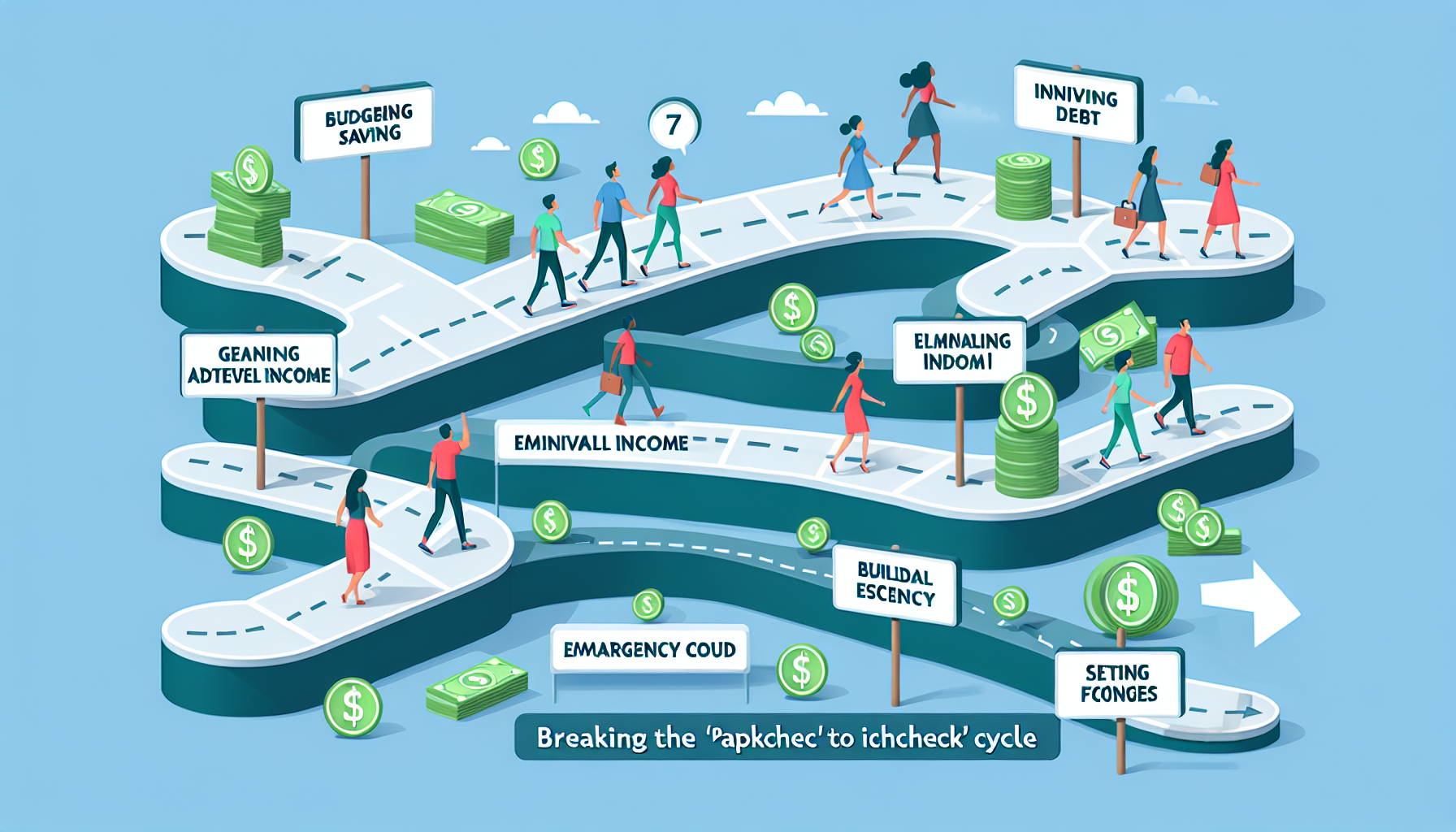
Breaking the Paycheck-to-Paycheck Cycle: 7 Strategies for Financial Stability
Breaking the paycheck-to-paycheck cycle requires intentional planning and disciplined financial habits. Here are seven practical strategies to help you achieve financial stability:
1. Track Your Expenses
Begin by monitoring where your money goes each month. This awareness is the foundation for meaningful financial change. Learn more
2. Create a Realistic Budget
Develop a budget that aligns with your actual income and lifestyle. A practical approach is the 50/30/20 rule:
- 50% for needs (e.g., rent, groceries, transportation)
- 30% for wants (e.g., entertainment, dining out)
- 20% for savings or debt repayment
Adjust these percentages as needed to fit your circumstances. Learn more
3. Build an Emergency Fund
Aim to save at least 3-6 months’ worth of living expenses. This fund acts as a safety net for unexpected costs, reducing the need to rely on credit cards or loans. Learn more
4. Pay Yourself First
Treat savings as a non-negotiable expense by setting up automatic transfers to your savings account each payday. This ensures consistent saving without the temptation to spend leftover funds. Learn more
5. Manage Debt Strategically
Prioritize paying off high-interest debts, such as credit cards, using methods like the debt avalanche (paying off debts from highest to lowest interest rate) or debt snowball (paying off debts from smallest to largest balance). Learn more
6. Increase Your Income
Explore opportunities to boost your earnings, such as taking on a part-time job, freelancing, or monetizing a skill. Additional income can accelerate debt repayment and savings growth. Learn more
7. Automate Your Finances
Set up automatic transfers for savings and bill payments to ensure consistency and avoid late fees. Automation simplifies financial management and helps maintain discipline. Learn more
Implementing these strategies requires commitment and time, but they can lead to greater financial security and freedom.
For More Information
For a visual guide on breaking the paycheck-to-paycheck cycle, you might find this video helpful: