
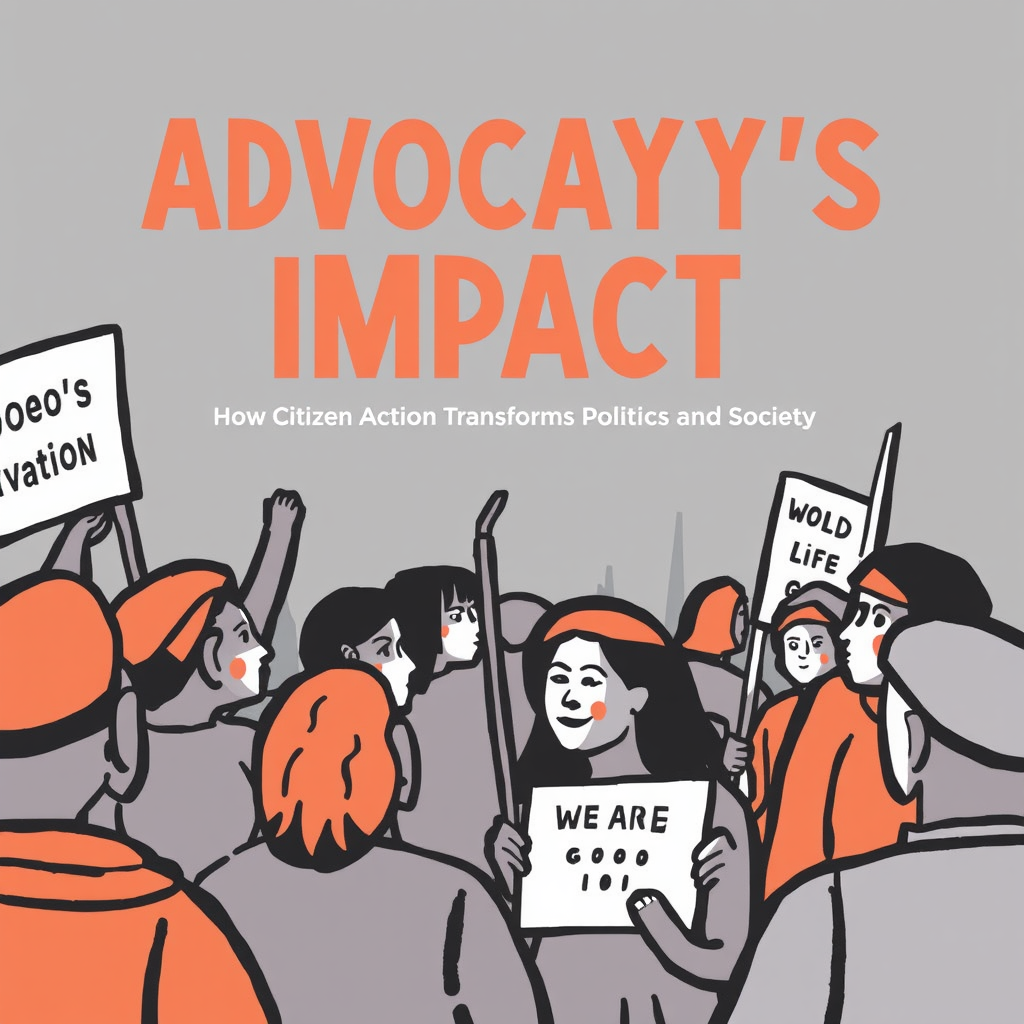
The Power of Your Voice: How Citizen Advocacy Reshapes Modern Politics and Society
In an era defined by rapid-fire news cycles and complex global challenges, it is easy to succumb to the “bystander effect.” Many citizens feel that their individual voices are lost in the cacophony of partisan bickering and corporate lobbying. However, historical data and modern sociological trends tell a different story. Citizen advocacy—the act of organized individuals championing a cause—remains the most potent catalyst for structural change in human history. From the local zoning board to the halls of international summits, the persistent pressure of the public is what turns the wheels of progress.
Did you know that research suggests it only takes 3.5% of a population actively participating in nonviolent protests to ensure serious political change? This “3.5% rule,” coined by Harvard political scientist Erica Chenoweth, highlights a profound truth: systemic transformation does not require a majority to start; it requires a committed, vocal minority to lead. This article explores how citizen action transcends the ballot box to fundamentally transform our political landscapes and social fabrics.
1. Beyond the Ballot: Understanding the Layers of Citizen Advocacy
While voting is a fundamental democratic right, it is often a “static” form of participation. Citizen advocacy, by contrast, is dynamic and continuous. It bridges the gap between election cycles, ensuring that elected officials remain accountable to the evolving needs of their constituents. To understand its impact, we must look at the different layers where advocacy operates.
Grassroots Organizing vs. Grasstops Influence
Grassroots advocacy starts from the ground up. It involves mobilizing large numbers of ordinary people to take collective action, such as signing petitions, attending town hall meetings, or participating in marches. Its power lies in numbers and the moral weight of public sentiment. In contrast, grasstops advocacy involves leveraging influential community leaders—business owners, religious figures, or local celebrities—who have direct access to decision-makers. The most successful movements harmonize these two approaches, using grassroots energy to create political pressure while using grasstops connections to open doors.
Direct vs. Indirect Advocacy
Advocacy also splits into direct and indirect methods. Direct advocacy involves lobbying—communicating directly with legislators to influence specific bills. Indirect advocacy focuses on public education and narrative shifting. By changing how the public perceives an issue, advocates create an environment where political change becomes inevitable. For example, before the Clean Air Act could be passed, years of indirect advocacy were needed to educate the public on the health risks of smog, creating the political “will” for leaders to act.
2. The Legislative Ripple Effect: How Local Action Becomes National Policy
Many of the most significant national policies in the modern world began as “pilot programs” or local ordinances sparked by citizen demand. This is often referred to as the “laboratory of democracy” effect. When citizens focus their energy on municipal or state levels, they create a proof of concept that can be scaled upward.
- Marriage Equality: Long before the Supreme Court ruling in 2015, advocates spent decades winning battles at the state and local levels. Each local victory decreased the perceived risk for national politicians, eventually leading to a tipping point.
- Environmental Standards: California’s strict emissions standards, driven by local health advocates, forced the global automotive industry to adapt, effectively setting a de facto national standard long before federal mandates caught up.
- Minimum Wage Increases: The “Fight for $15” movement began as a localized labor protest in New York City. Through persistent citizen advocacy, it moved from a “radical” idea to a legislative reality in dozens of cities and states across the country.
The impact here is structural. Citizen action forces the legislative agenda. Without public pressure, politicians tend to focus on the “status quo” or the interests of the highest donors. Advocacy provides a necessary counterweight, ensuring that the needs of the many outweigh the influence of the few.
3. Shifting the Overton Window: Changing Cultural Norms
Politics is downstream from culture. One of the most profound impacts of citizen advocacy is its ability to shift the Overton Window—the range of policies or ideas considered “acceptable” to the mainstream population at any given time. When advocates speak out, they aren’t just trying to pass a law; they are trying to redefine what is considered “right” or “normal.”
Consider the shift in attitudes toward mental health awareness. Twenty years ago, mental health was a taboo subject in both the workplace and the political arena. Through the relentless advocacy of patient groups, non-profits, and vocal citizens, the narrative shifted. Today, mental health funding and workplace wellness are standard components of public policy and corporate strategy. This didn’t happen because politicians suddenly had a change of heart; it happened because citizens changed the cultural environment in which those politicians live.
Language and framing play a critical role here. Effective advocacy uses storytelling to humanize data. A statistic about poverty might be ignored, but a community’s collective story about the struggle to afford housing creates empathy and a sense of urgency. By changing the language used to describe a problem, advocates change the solutions that the public is willing to support.
4. The Digital Revolution: Scaling Impact in the 21st Century
The advent of social media and digital communication has fundamentally altered the speed and scale of citizen advocacy. In the past, organizing a national protest required months of planning and significant financial resources. Today, a viral hashtag or a digital petition can mobilize millions in hours.
The Rise of “Distributed Organizing”
Modern advocacy uses distributed organizing, where a central organization provides the tools and branding, but local volunteers lead their own “cells” or chapters. This allows for a hybrid of national reach and local relevance. During the global climate strikes, digital platforms allowed students in thousands of different cities to synchronize their efforts, creating a global moment that dominated the news cycle and forced climate change to the top of the G7 agenda.
The Accountability Loop
Digital tools have also created a “real-time” accountability loop. Citizens can now tag their representatives in public forums, record interactions at town halls, and share voting records instantly. This transparency makes it harder for politicians to say one thing to their constituents and another to their donors. The “digitally-enabled citizen” is a more informed and dangerous opponent for any politician hoping to operate in the shadows.
5. Economic Advocacy: The Power of the Purse
Societal transformation doesn’t only happen in state houses; it happens in the marketplace. Economic advocacy—often called “ethical consumerism” or “socially responsible investing”—is a form of citizen action where individuals use their purchasing power to demand change.
When citizens organize boycotts (refusing to buy) or buycotts (intentionally supporting), they force corporations to take a stand on social and environmental issues. This has led to the rise of ESG (Environmental, Social, and Governance) standards in the corporate world. Major brands now prioritize sustainability and diversity not necessarily because of altruism, but because they know that modern consumers—especially Millennials and Gen Z—view their purchases as an extension of their values.
By targeting the financial incentives of large institutions, citizen advocates can achieve results that legislation sometimes cannot. Corporate policy can change overnight in response to a public relations crisis, whereas a bill might take years to pass through a gridlocked legislature.
Conclusion: The Path Forward for the Active Citizen
The impact of advocacy is not always immediate, and it is rarely linear. It is a process of “chipping away” at systemic barriers. However, the history of progress is exclusively a history of people who refused to stay silent. Citizen action transforms politics by providing the incentive for courage among leaders and transforms society by expanding the boundaries of empathy.
If you are looking to make an impact, remember that you do not need to be a professional lobbyist or a billionaire donor. You can start by:
- Joining a local community group focused on a single issue (e.g., education, parks, or transit).
- Contacting your local representatives—not just when you’re angry, but to provide constructive feedback on pending issues.
- Educating your network by sharing reliable information and human stories that challenge the status quo.
The most important takeaway is this: apathy is a self-fulfilling prophecy. If you believe you have no power, you relinquish it. But when you join with others, your “small” voice becomes part of a roar that is impossible to ignore. The future is not something that happens to us; it is something we build, one act of advocacy at a time.
Take Action Today: Research one local issue currently before your city council and send a brief, respectful email expressing your stance. You might be surprised at how much weight your individual perspective carries when it arrives on a desk that is otherwise silent.