
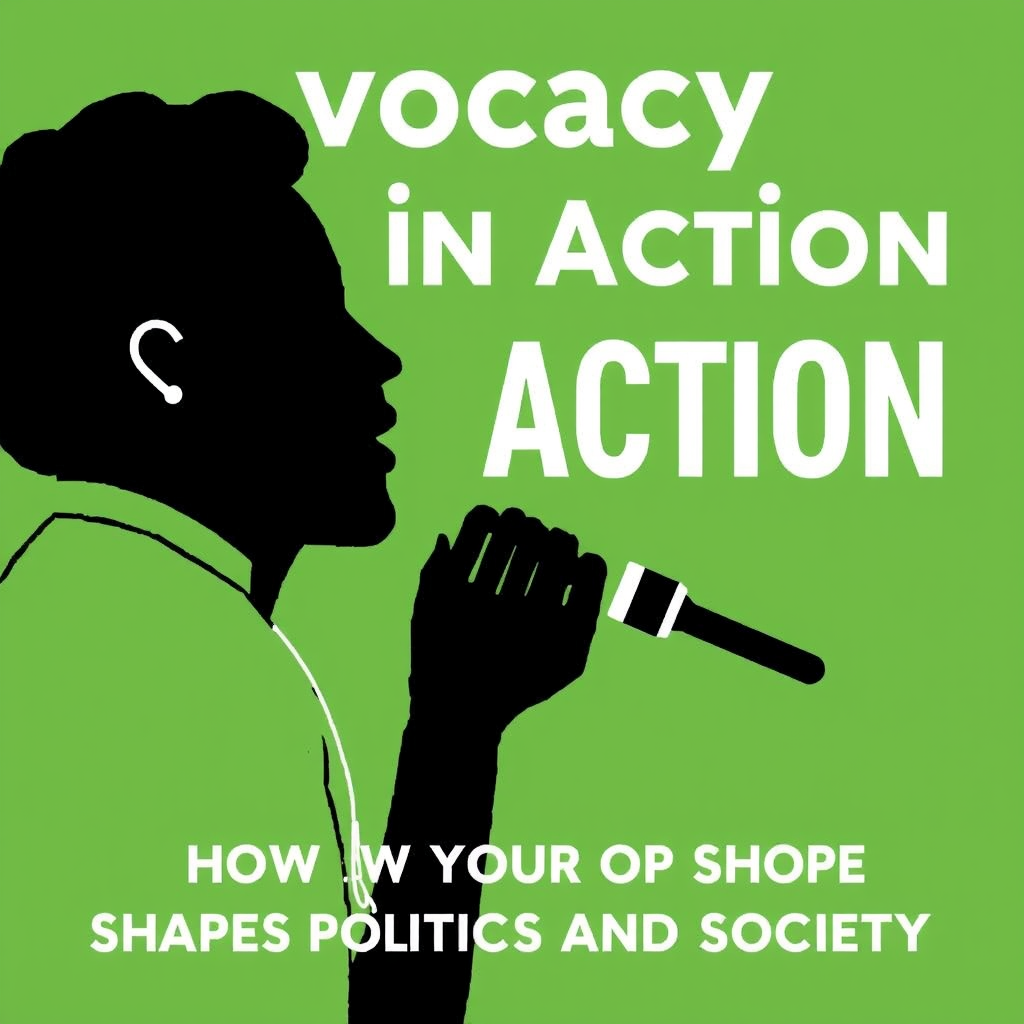
Advocacy in Action: Why Your Voice is the Most Powerful Tool in Modern Democracy
When was the last time you felt your opinion actually shifted the needle of history? In an era defined by polarized news cycles and complex global crises, it is easy to succumb to the “bystander effect” of modern politics. However, the data suggests a different reality: civic engagement and advocacy remain the primary drivers of legislative and social evolution. From the local school board meeting to the halls of international summits, the collective resonance of individual voices is what transforms a static policy into a living movement.
Advocacy is not merely a buzzword for activists; it is the fundamental mechanism of a functioning democracy. It is the process of building support for a specific cause or policy to influence decisions within political, economic, and social systems. Whether it is a viral hashtag or a handwritten letter to a senator, these actions aggregate into a force that leaders cannot ignore. In this deep dive, we explore how your voice shapes the world, the mechanics of modern influence, and the practical steps you can take to become an effective advocate for change.
1. The Mechanics of Influence: How Personal Advocacy Becomes Policy
To understand the power of advocacy, one must first dismantle the myth that politics is a “top-down” process. While legislators sign bills, the impetus for those bills almost always originates from the grassroots level. Modern advocacy operates through three primary channels: direct lobbying, grassroots organizing, and public education.
Direct Lobbying vs. Grassroots Organizing
Direct lobbying involves communicating directly with decision-makers—government officials, their staff, or corporate executives—to influence specific legislation or regulations. While many associate this with high-paid professionals, “citizen lobbyists” often carry more weight. A personal story from a constituent frequently outweighs a generic brief from a firm because it represents a vote and a real-world consequence.
Grassroots organizing, on the other hand, is about the “power of the many.” It focuses on mobilizing the general public to take action. When thousands of people call a local representative simultaneously regarding a zoning law or environmental protection, it creates a “political cost” for inaction. This collective pressure is the bedrock of every major social shift in the last century, from the Civil Rights Movement to the push for climate policy.
The Power of Public Education
You cannot change a system that people do not understand. Advocacy often begins with public education—reframing an issue so that it resonates with the average citizen. By translating complex legal jargon into human stories, advocates create the cultural “permission” for politicians to act. When the public’s perception of an issue shifts, the political landscape shifts with it.
2. The Digital Megaphone: Advocacy in the Age of Social Media
The 21st century has democratized the tools of influence. In the past, reaching a national audience required a massive budget or a press pass. Today, a 60-second video or a well-timed thread can bypass traditional gatekeepers and reach millions. This “digital megaphone” has fundamentally changed the speed and scale of advocacy.
The “Hashtag Effect” is a prime example. Movements like #BlackLivesMatter, #MeToo, and #FridaysForFuture didn’t just trend; they forced institutional audits, changed corporate hiring practices, and influenced international law. However, digital advocacy is a double-edged sword. To move beyond “slacktivism”—the act of liking or sharing without further engagement—digital voices must be channeled into tangible outcomes.
- Viral Awareness: Rapidly bringing a niche issue to the global stage.
- Crowdsourced Accountability: Using digital records to hold officials accountable for past statements or actions.
- Micro-Donations: Funding movements through small, decentralized contributions that rival the power of “dark money.”
The true power of digital advocacy lies in its ability to lower the barrier to entry. You no longer need to travel to the capital to be heard; you can testify via Zoom, sign verified petitions, and organize community rallies from your smartphone. This accessibility ensures that diverse perspectives—especially from marginalized communities—are finally being brought to the table.
3. The Psychology of Change: Why Stories Move Mountains
Why does one cause ignite a fire while another fades into obscurity? The answer lies in narrative psychology. Research shows that while data and statistics are necessary for policy briefs, humans are biologically wired to respond to stories. Effective advocacy uses “The Story of Self, The Story of Us, and The Story of Now.”
The Story of Self explains why you personally care about an issue. It builds ethos and authenticity. The Story of Us connects your experience to a larger community, creating a sense of shared values and solidarity. Finally, The Story of Now creates urgency, explaining why action is required at this exact moment to avoid a crisis or seize an opportunity.
When you use your voice, you aren’t just presenting a demand; you are constructing a narrative that makes change feel inevitable. This is why personal testimonies in congressional hearings are so impactful. They put a human face on “the uninsured,” “the student debt crisis,” or “the veteran experience.” Facts provide the foundation, but empathy drives the action.
4. Case Studies: When the “Small Voice” Won Big
History is a testament to the fact that organized advocacy works. Let’s look at three distinct examples where public voice shaped society:
The Fight for the 19th Amendment
The women’s suffrage movement didn’t succeed through a single vote. It was decades of unrelenting advocacy—parades, lectures, hunger strikes, and lobbying. Suffragists used their voices to challenge the very definition of democracy, eventually forcing a constitutional amendment that changed the trajectory of the United States forever.
The Clean Air Act (1970)
In the late 1960s, American cities were choked by smog and rivers were catching fire. It wasn’t the politicians who initiated the change; it was the first Earth Day in 1970, where 20 million Americans took to the streets. This massive display of public advocacy gave Congress the mandate to pass some of the most comprehensive environmental laws in history, proving that public health is a bipartisan priority when the people demand it.
Marriage Equality
The shift in marriage equality over the last two decades is one of the fastest cultural changes in history. This was achieved through a dual-track advocacy strategy: legal battles in the courts and “hearts and minds” campaigns in local communities. By coming out and telling their stories, LGBTQ+ individuals changed the social fabric, making the eventual Supreme Court ruling a reflection of a society that had already evolved.
5. Overcoming Barriers: Burnout, Apathy, and Misinformation
Advocacy is exhausting. The path to social change is rarely a straight line; it is a series of two steps forward and one step back. Two of the greatest enemies to effective advocacy are cynicism and misinformation.
Cynicism suggests that “the system is rigged” and “my voice doesn’t matter.” This is exactly what those in power hope you believe. Apathy is a tool of the status quo. To combat this, advocates must focus on incremental wins. You may not solve global poverty today, but you can influence the funding for a local food pantry. These small victories provide the psychological fuel for long-term engagement.
Misinformation, meanwhile, seeks to drown out valid advocacy with noise. In the digital age, being an advocate also means being a fact-checker. Reliable advocacy is built on credible data. To maintain your influence, you must ensure that your voice is not just loud, but accurate. This builds trust with your community and your representatives.
6. Practical Steps: How to Become an Effective Advocate Today
You don’t need a degree in political science to be an advocate. You just need a strategy. If you are ready to put your “Advocacy in Action,” here is a roadmap to get started:
- Identify Your “North Star”: Don’t try to fix everything at once. Choose one or two issues you are deeply passionate about—whether it’s education, local infrastructure, or human rights.
- Research Your Representatives: Know who represents you at the local, state, and federal levels. Visit CommonCause.org or your local government portal to find their contact information.
- Master the “Three-Minute Ask”: Whether on a phone call or in a meeting, be concise. State your name, your address (to prove you’re a constituent), the issue you’re calling about, and your specific “ask” (e.g., “Vote NO on Bill 123”).
- Join a Coalition: Advocacy is a team sport. Find organizations that are already doing the work. They provide the resources, templates, and community you need to sustain your efforts.
- Use Your Platform: Leverage your social media, your blog, or even your workplace to spread awareness. Authentic influence starts with your immediate circle.
Conclusion: The Future is Written by Those Who Show Up
Democracy is not a spectator sport; it is a collaborative project that requires constant maintenance. Your voice is the primary currency of this system. When you speak up, you are doing more than just expressing an opinion—you are participating in the ancient and essential tradition of shaping the collective future.
The challenges we face—from economic inequality to the climate crisis—can feel insurmountable. But remember that every law currently on the books and every right we enjoy today was once just an “unrealistic” idea championed by a few persistent voices. Advocacy is the bridge between the world as it is and the world as it should be.
Don’t wait for a leader to emerge; recognize that through your advocacy, you are the leader. Whether you are signing a petition, attending a town hall, or simply having a difficult conversation at the dinner table, your voice matters. Action is the antidote to despair. It is time to put your advocacy in action and shape the society you want to live in.
Are you ready to be heard? Start by contacting your local representative today and voicing your stance on an issue that matters to your neighborhood.