
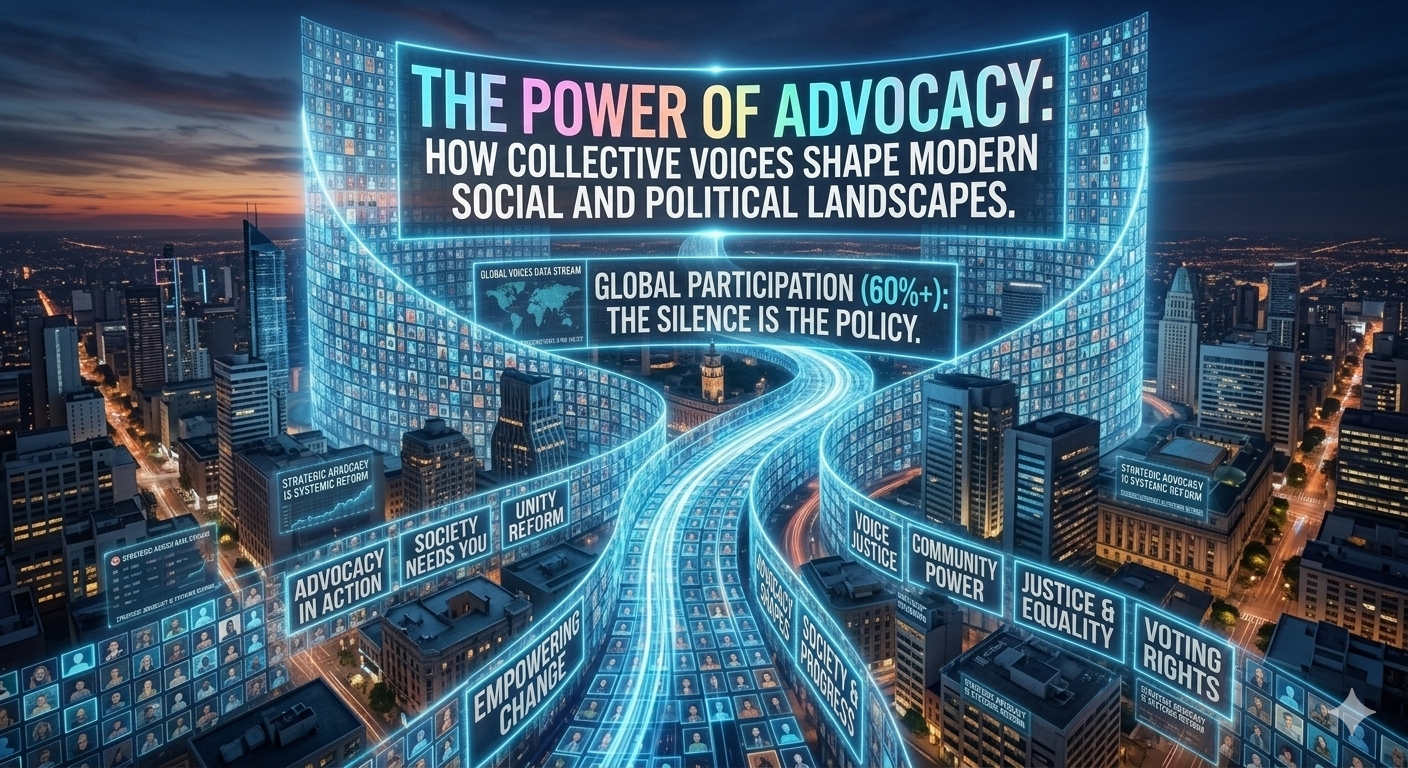
The Power of Advocacy: How Collective Voices Shape Modern Social and Political Landscapes
In an era defined by rapid information exchange and global connectivity, the concept of advocacy has evolved from a niche activity of professional lobbyists into a powerful, democratized force for global transformation. Whether it is a viral hashtag sparking a worldwide conversation on gender equality or a local community organizing to protect a neighborhood park, advocacy is the engine behind social and political progress. But what truly makes advocacy effective in the 21st century? It is no longer just about raising awareness; it is about the strategic application of pressure, the mobilization of data, and the relentless pursuit of systemic reform.
Recent data suggests that civic engagement is reaching record highs. According to various global studies, over 60% of Gen Z and Millennial consumers prefer to support brands and organizations that take a stand on social issues. This shift signifies a broader trend: we are living in a Participation Economy, where staying silent is increasingly viewed as a political act in itself. This article explores the mechanics of advocacy, the digital tools reshaping the landscape, and the strategic frameworks that turn a simple message into a movement.
1. Defining the Spectrum: Advocacy, Activism, and Lobbying
To understand the power of advocacy, we must first distinguish it from its neighboring concepts. While often used interchangeably, advocacy, activism, and lobbying serve different roles in the ecosystem of change.
- Advocacy: The broad process of supporting a cause or proposal. It involves identifying a problem and recommending a specific solution to decision-makers.
- Activism: Often the more visible “front end” of advocacy, focusing on direct action, protests, and public demonstrations to create immediate tension or awareness.
- Lobbying: A specialized form of advocacy that specifically targets legislators and government officials to influence the passage or defeat of specific legislation.
The most successful movements integrate all three. For instance, the fight for environmental sustainability utilizes activism (climate strikes) to build public pressure, advocacy (educational campaigns) to change consumer behavior, and lobbying to ensure that renewable energy subsidies are written into national budgets.
2. The Digital Revolution: Moving Beyond “Slacktivism”
Technology has fundamentally lowered the barrier to entry for advocacy. In the past, launching a national movement required significant capital, media connections, and physical infrastructure. Today, a smartphone is a megaphone. However, this has led to the critique of “slacktivism”—the idea that clicking a “like” button or sharing a post replaces meaningful action.
Despite this critique, digital advocacy has proven its worth through Democratized Information. Movements like #BlackLivesMatter or #MeToo did not just stay online; they translated digital sentiment into legislative changes, corporate policy shifts, and a fundamental restructuring of cultural norms. The digital sphere acts as a “top-of-funnel” mechanism, bringing millions of people into the fold who can then be moved toward deeper levels of engagement, such as donating, voting, or contacting their representatives.
3. Three Pillars of High-Impact Advocacy Campaigns
Depth is what separates a fleeting trend from a lasting movement. To drive genuine social and political change, advocacy efforts must be built on three core pillars:
Pillar I: Data-Driven Storytelling
Numbers provide the logic, but stories provide the heart. High-impact advocacy uses quantitative data to prove the scale of a problem while utilizing qualitative narratives to humanize the impact. For example, an advocacy group fighting for affordable housing doesn’t just present a graph of rising rents; they share the story of a single mother forced to choose between groceries and her mortgage. This dual approach appeals to both the intellect and the emotions of policymakers and the public.
Pillar II: Strategic Coalition Building
No single organization can change the world in isolation. Advocacy is most powerful when it builds “unlikely alliances.” When labor unions, environmental groups, and corporate leaders find common ground on a specific policy—such as green infrastructure—their combined influence is nearly impossible for politicians to ignore. Coalition building expands the reach of a message and provides the political cover necessary for legislators to make difficult decisions.
Pillar III: The “Inside-Outside” Strategy
Effective advocacy requires a two-pronged approach. The “Outside Strategy” involves public-facing work: media campaigns, protests, and grassroots mobilization designed to create public demand. The “Inside Strategy” involves the quiet work of meeting with policymakers, drafting policy briefs, and negotiating the fine print of legislation. Without the outside pressure, the inside work lacks urgency; without the inside work, the outside pressure has nowhere to go.
4. The Role of Corporate Advocacy and CSR
In the modern landscape, the private sector is no longer a silent bystander. Corporate Social Responsibility (CSR) has evolved into Corporate Advocacy. Brands are increasingly expected to use their massive platforms and economic might to influence social outcomes. Whether it is tech giants advocating for privacy rights or retail brands pushing for fair labor laws, corporate advocacy can bridge the gap between public sentiment and legislative action.
However, this comes with risks. “Purpose-washing”—where a company claims to support a cause but lacks the internal policies to match—can lead to severe reputational damage. Authenticity is the currency of modern advocacy. Organizations that align their internal operations with their external advocacy efforts gain the trust of a skeptical public.
5. Overcoming Barriers: Misinformation and Advocacy Fatigue
The path to change is rarely smooth. Today’s advocates face unprecedented challenges, most notably misinformation and advocacy fatigue. In a saturated media environment, truth can often be drowned out by coordinated disinformation campaigns designed to maintain the status quo.
To combat this, modern advocates must become experts in Media Literacy and Rapid Response. Correcting the record in real-time and providing clear, verifiable facts is essential. Furthermore, to prevent burnout (advocacy fatigue), movements must celebrate “small wins.” Sustaining a movement for years or decades requires a culture of care and the recognition that systemic change is a marathon, not a sprint.
6. The Power of the Individual: Every Voice Counts
It is easy to feel powerless in the face of global crises, but history shows that individual actions are the building blocks of every major reform. The multiplier effect of advocacy means that one person’s commitment can inspire ten others, creating a ripple effect that eventually reaches the halls of power.
Individual advocacy can take many forms:
- Constituent Engagement: Regularly calling or writing to local representatives to voice concerns on specific bills.
- Micro-Donations: Providing the financial “fuel” for non-profit advocacy groups to sustain their legal and research efforts.
- Consumer Choice: Using purchasing power to reward companies that align with your values and boycott those that do not.
Conclusion: The Future of Advocacy
Advocacy is the heartbeat of a healthy democracy. It is the mechanism through which the marginalized find a voice and the status quo is challenged. As we look to the future, the power of advocacy will only grow as technology further erodes the barriers between citizens and their leaders.
However, the responsibility lies with us to ensure that this power is used strategically and ethically. Moving forward, the goal is not just to be “loud,” but to be effective. By combining data, storytelling, and coalition-building, we can move beyond the noise of the digital age and drive meaningful, lasting change in our social and political systems.
Take Action Today: Identify one cause that resonates with you. Research a local advocacy group working on that issue and sign up for their newsletter or attend a town hall. The transition from observer to advocate starts with a single step. Your voice is the most powerful tool you own—use it.